
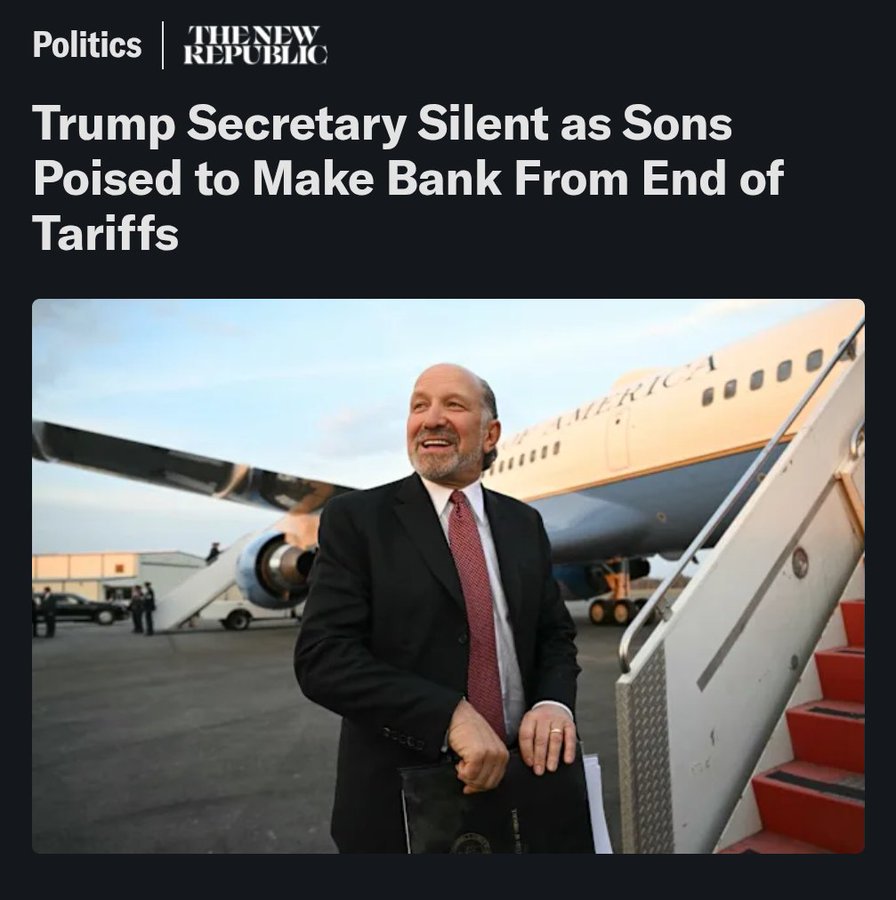
Reports have sparked controversy after revealing that the sons of Howard Lutnick may have generated substantial profits from trading so-called tariff refund rights, during a period when tariff policies were actively being promoted.
According to circulating information, Lutnick’s sons—through Cantor Fitzgerald—allegedly purchased refund claims at steep discounts, around 20–30 cents on the dollar, before the U.S. government began reimbursing them at full value.
Such pricing discrepancies could imply returns of 3–5x, raising serious questions about potential conflicts of interest or access to privileged information.
However, there has been no official confirmation of wrongdoing, and regulators have yet to issue formal statements regarding these claims.
If substantiated, analysts suggest this case could become one of the most significant conflict-of-interest controversies in modern U.S. economic policy, highlighting the intersection between political decision-making and financial opportunity.