
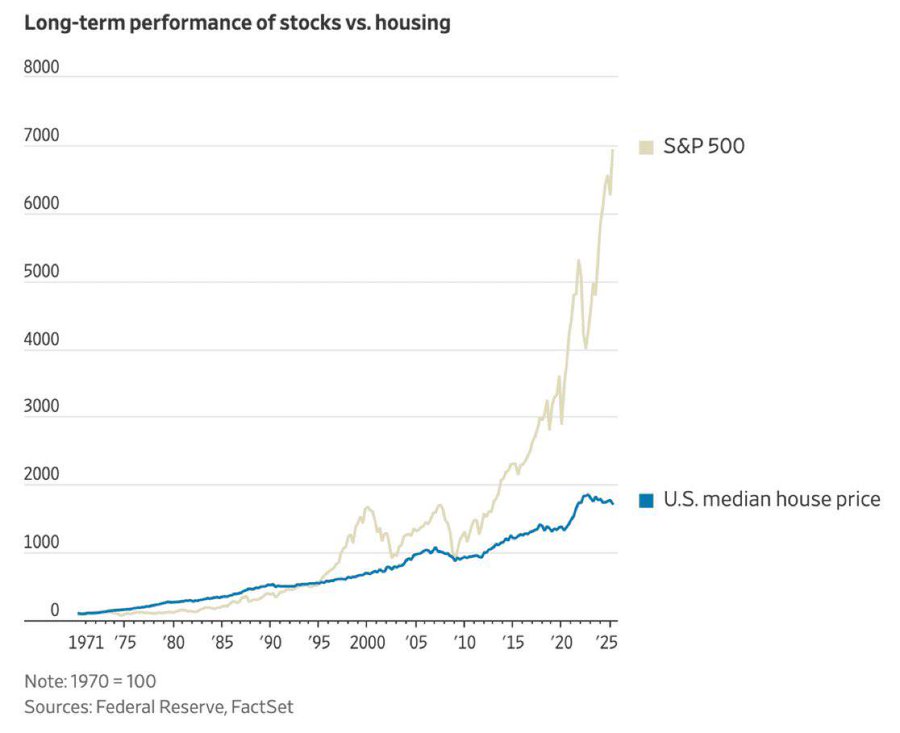
Historical data shows that the S&P 500 has significantly outperformed U.S. housing prices over the long term, with equities delivering substantially higher cumulative returns since the 1970s.
The chart highlights that an investment in stocks since 1970 would have grown multiple times more than a comparable investment in real estate, despite periods of volatility such as the dot-com bubble and the 2008 financial crisis.
While housing is generally considered a more stable and less volatile asset class, its growth has been relatively slower, driven by factors like income levels, interest rates, and local demand dynamics.
Analysts note that equities benefit from compounding corporate earnings growth, whereas real estate performance is more closely tied to macroeconomic and financing conditions.
However, real estate remains attractive for diversification, rental income, and inflation hedging, making it a complementary asset rather than a direct substitute for equities in investment portfolios.